
Fitness is not only about lifting heavier, running faster, or sweating through a tough workout. A strong fitness routine also depends on how well your body moves, how prepared your muscles and joints feel, and how easily you can recover between sessions.
That is where mobility aids come in. At BeYourFitness.com, we believe mobility tools can be an important part of a balanced fitness lifestyle because they help support movement, flexibility, comfort, and consistency.
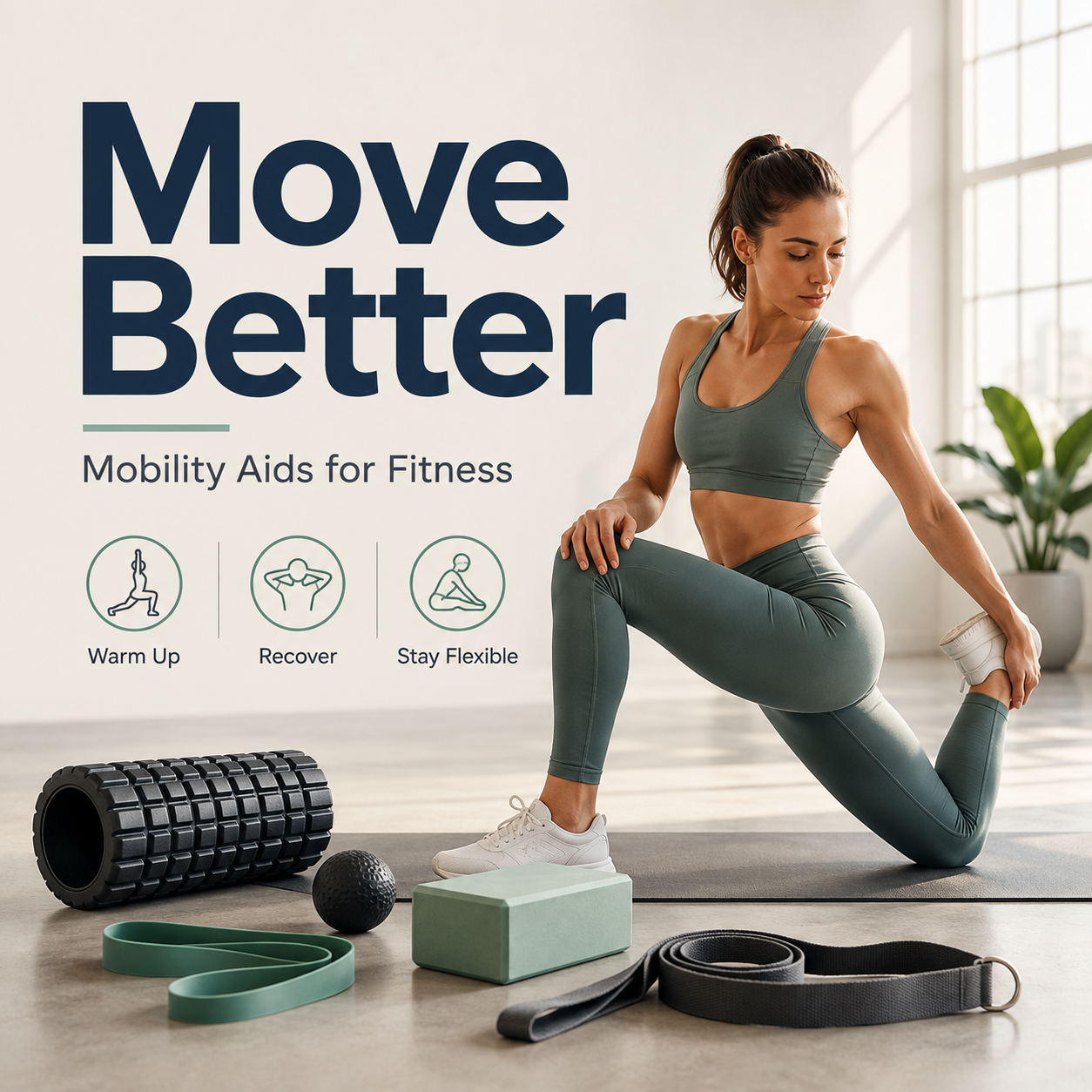
Mobility aids for fitness are tools designed to help your body move better before, during, or after exercise. These products may include resistance bands, stretching straps, foam rollers, massage balls, balance tools, yoga blocks, knee support sleeves, ankle supports, wrist wraps, mobility sticks, and other recovery or movement accessories.
Some are used to warm up the body before a workout. Others are used to stretch, support proper form, reduce tightness, or help with recovery after training.
Whether you are new to fitness or have been working out for years, mobility should not be treated as an afterthought. It can help you prepare your body for movement, improve the quality of your exercises, and make your routine feel more comfortable over time.
Mobility aids in fitness are products that help support better range of motion, stretching, stability, alignment, and recovery. They are not only for people who feel stiff or sore. They can be useful for anyone who wants to move with more confidence and control.
For example, a stretching strap can help you safely ease into a hamstring stretch without forcing your body too far. A foam roller can be used before or after workouts to help loosen tight muscles. Resistance bands can assist with warmups, stretching, strength activation, and controlled movement. Yoga blocks can help make certain stretches or poses more accessible by giving your body extra support.
These tools are simple, but they can make a big difference when used consistently. They help create a smoother connection between strength, flexibility, and movement.
Mobility is your body’s ability to move through a range of motion with control. It is different from flexibility, although the two are connected. Flexibility is more about how much a muscle can stretch, while mobility includes flexibility, joint movement, stability, and control.
Good mobility can support better workout performance because your body is able to move more naturally through exercises. Think about squats, lunges, overhead presses, pushups, deadlifts, or even basic stretching.
If your hips, ankles, shoulders, or back feel restricted, these movements may feel harder than they need to. When your body moves better, your workouts can feel smoother and more effective.
Mobility also matters because it supports everyday life. Bending, reaching, walking, carrying groceries, sitting at a desk, playing with kids, and doing household tasks all require movement.
Fitness is not just about what happens during a workout. It is also about feeling capable and comfortable in daily life.
One of the best times to use mobility aids is before exercise. A good warmup helps prepare your body for the workout ahead. Instead of jumping straight into heavy lifting or intense cardio, mobility tools can help wake up your muscles and joints.
Resistance bands are especially useful before workouts. You can use them for glute activation, shoulder warmups, hip mobility, or light resistance movements.
For example, banded side steps can help activate the hips and glutes before leg day. Band pull-aparts can help warm up the shoulders and upper back before an upper-body workout.
Foam rollers can also be used before training to help reduce muscle tightness and get the body ready to move. A few gentle passes over tight areas like the calves, quads, hamstrings, or upper back may help you feel more prepared for movement.
The goal before a workout is not to spend too much time relaxing the body, but to help it feel awake, loose, and ready.
Stretching straps and mobility sticks can also be helpful before workouts when used with controlled movement. Dynamic stretching, which means moving through stretches instead of holding them for a long time, can help prepare the body for activity.
Mobility aids are also useful after exercise. This is when many people focus on cooling down, stretching, and recovery.
After a workout, your muscles may feel tight, tired, or worked. Using mobility tools can help you slow down and give your body time to reset.
Foam rollers are a popular post-workout tool because they can help target areas that feel tense. Massage balls can be useful for smaller areas such as the feet, shoulders, glutes, or upper back.
Stretching straps can help you ease into deeper stretches with more control. Yoga blocks can support your body during cool-down stretches, making it easier to relax into each position.
Post-workout mobility work does not need to be complicated. Even 5 to 10 minutes can be helpful.
Stretch your legs after a lower-body workout, open your chest and shoulders after upper-body training, or focus on your hips and back after a long day of sitting.
The key is to listen to your body and use tools that help you feel supported, not forced.
Rest days are not always about doing nothing. Sometimes, light movement can help your body feel better between workouts.
Mobility aids can be great for active recovery days when you want to stay loose without doing a full training session.
A rest day mobility routine may include gentle stretching, foam rolling, balance work, or light resistance band movements. This can be especially helpful if you feel stiff from previous workouts or from sitting for long periods.
A simple routine might include foam rolling the legs, using a strap for hamstring stretches, doing gentle hip openers, and using a band for shoulder mobility.
Active recovery should feel comfortable and easy. It is not meant to be another intense workout. It is a chance to support your body, improve movement, and prepare for your next training day.
If you are new to fitness, mobility aids can make exercise feel more approachable. Many beginners feel tight, unsteady, or unsure about their form.
Tools like yoga blocks, resistance bands, and stretching straps can provide extra support while you build confidence.
Yoga blocks can help bring the floor closer to you during stretches or balance exercises. Resistance bands can make certain movements easier or more controlled.
Stretching straps can help you stretch without rounding your back or reaching too far. These tools can help you work within your current ability while still making progress.
Beginners should focus on comfort, control, and consistency. You do not need to push your body into extreme stretches or advanced movements. Small improvements in mobility can add up over time.
Strength training and mobility work go hand in hand. To lift well, your body needs enough range of motion to perform exercises with good form.
For example, ankle mobility can affect squat depth. Shoulder mobility can affect overhead pressing. Hip mobility can affect lunges, deadlifts, and lower-body movement.
Resistance bands are excellent for strength training warmups. They can help activate muscles before heavier lifts.
Wrist wraps, knee sleeves, and other support products may also help some people feel more stable during certain movements. These items do not replace proper form, but they can provide extra support when used correctly.
Foam rolling and stretching after strength workouts can also help keep the body feeling mobile. When muscles become tight from repeated training, mobility work can help maintain movement quality.
Mobility tools are not just for weightlifting. They can also support runners, walkers, cyclists, and people who enjoy general cardio workouts.
Tight calves, hips, hamstrings, or lower backs can make cardio feel uncomfortable. Stretching straps, foam rollers, and massage balls can help target these areas before or after activity.
For people who spend a lot of time at a desk, mobility aids can be especially helpful. Sitting for long hours may lead to tight hips, rounded shoulders, and back stiffness.
A simple daily mobility routine can help counter some of that tightness and encourage better movement throughout the day.
Even if your workout is only a short walk or a light home routine, mobility still matters. Your body benefits from feeling prepared, supported, and cared for.
The right mobility aid depends on your goals and what your body needs.
If you feel tight after workouts, a foam roller or massage ball may be a good place to start. If stretching feels difficult, a stretching strap or yoga blocks can help.
If you want to warm up better before workouts, resistance bands are a smart choice. If you need support during certain exercises, items like knee sleeves or wrist wraps may be helpful.
It is also important to choose tools that fit your routine. The best mobility aid is one you will actually use.
Simple tools are often the most effective because they are easy to keep nearby and add into your day.
Mobility work should never feel sharp, painful, or forced. Gentle pressure, mild tension, and controlled movement are usually best.
If you are dealing with an injury, ongoing pain, limited movement, or a medical condition, it is a good idea to speak with a qualified professional before starting a new mobility routine.
Move slowly, breathe, and pay attention to how your body responds. More pressure is not always better. Longer stretching is not always better.
The goal is to support your body, not punish it.
Mobility aids can help you get more from your workouts by supporting warmups, cool-downs, recovery, flexibility, and better movement.
They are useful before exercise, after exercise, on rest days, and during everyday routines. Whether you are lifting weights, doing cardio, stretching at home, or building a more active lifestyle, mobility tools can help you move with more comfort and confidence.
At BeYourFitness.com, we are here to help customers build fitness routines that feel realistic, supportive, and personal.
Fitness is not about being perfect. It is about showing up, moving your body, and giving yourself the tools you need to keep going.
Explore mobility aids, fitness equipment, free weights, and clothing at beyourfitness.com and find products that support the way you move.
